HARD LIGHT BY BARRETT AVNER
Date: 03/24/23
Text: Barrett Avner
Photography: Noah Dillon
ON POST-PANDEMIC PHOTOGRAPHY
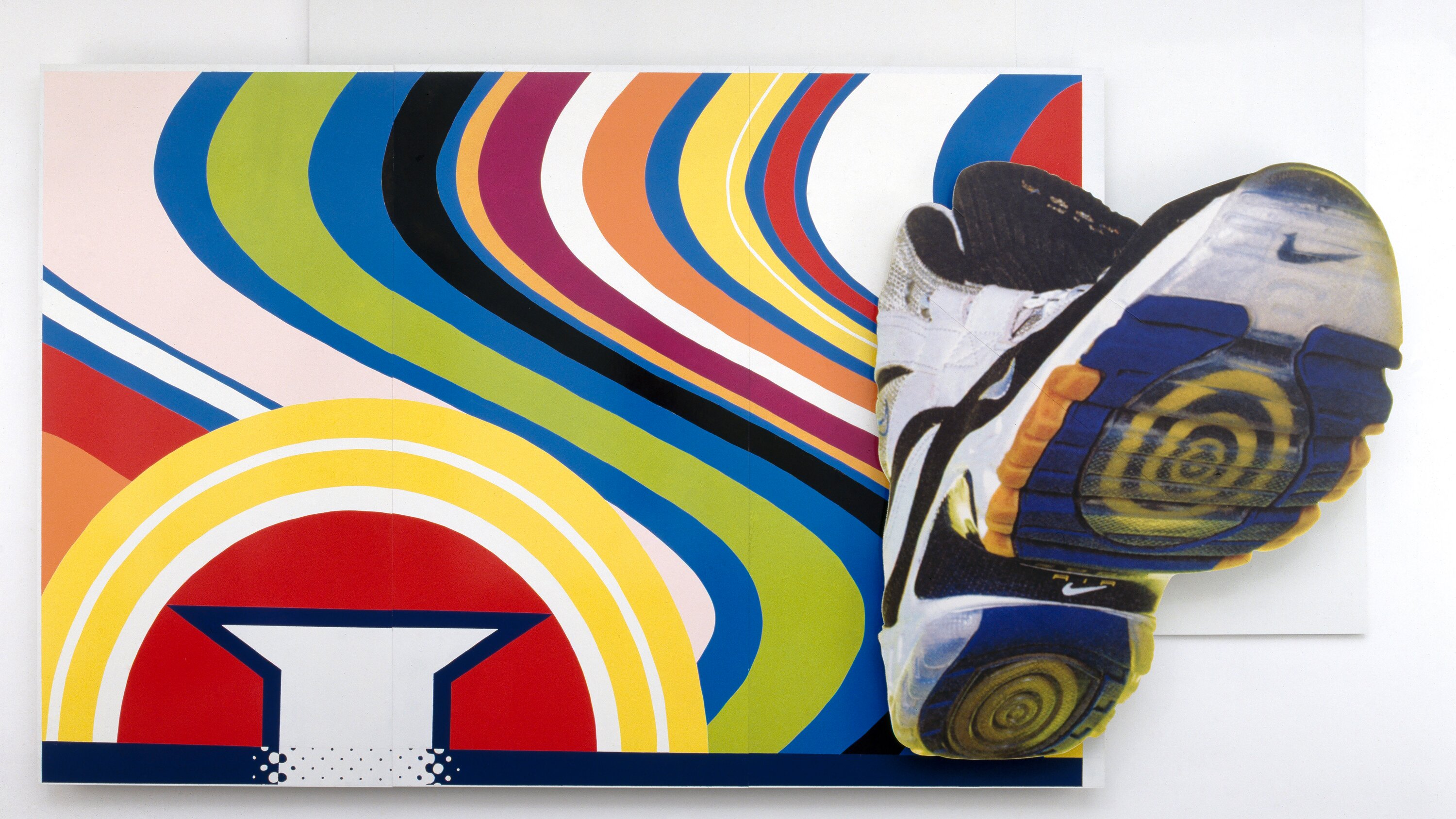
“You can no longer make art that is just art,” said Michel Majerus, a painter who died in 2002, but has seen a revival some twenty years later. ‘My’ instagram algorithm feeds me images from his recent exhibitions regularly, specifically his ‘Pornography Needs You’ piece from 2001. In its optimizable bold font, stars, and gray pastiche, it seems almost perfectly amenable to the speed and intensity-driven branding phase we’re in at the moment.
I can’t help but recognize various patterns in fashion. My personal pattern recognition scanner goes as follows: tattered American flags, unplugged appliances, camouflage, text on shirt, slogan, kitchen sink realism, Girl-On-Floor, lip filler, allusions to 9/11 & the twin towers, VR headsets, parking lot locations, screens, scanners, high lighting during day shoots outdoors…things had been headed this way for a while, but when exactly did I start noticing it everywhere?
To be fair, I’ve seen these images before in various assemblages. Contexts shift frequently, but the signifiers themselves are like a game of musical chairs that have been set in place and have merely jumped rooms. They had been lifted from the histories of somewhere else. Culture works in flows-decoded, recoded, and almost endlessly confusing. It’s not just a pattern in spite of what so-called trend forecasters might say. It’s complementary with speed, context, & intensity of perception. This is used as a staging for plausible deniability-”What do you mean this is x? It alludes to yz references”...ignoring the fact we can’t always place or articulate what's even being produced.


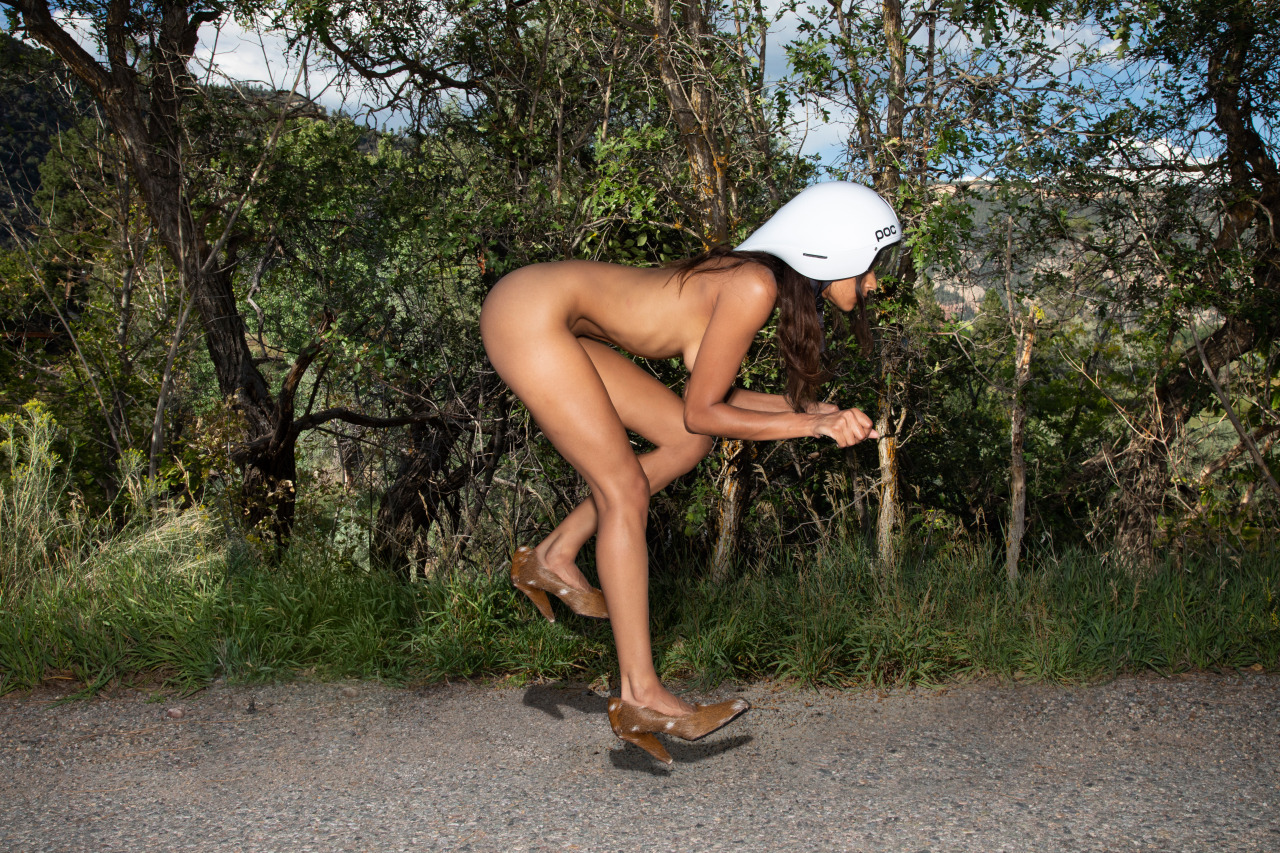
Photographer Noah Dillon's work straddles different worlds: the Americana iconography of the western mountain regions and the emerging sounds and styles we clung to in our teenage years searching for something new. This is relatable. When you’re young you can’t really control your environment, but you also want to explore other possibilities because life can feel so unpredictable and crazy. You just want to tap into the magic of the moment, the emotional drive to create something in the world. Art is created in a lucid communion with the beyond, its critical discourse is not always apparent. You kind of recognize it when you see it, it becomes the vehicle for which conversations later take shape.
It’s not the designers responsibility to control the lexicon of what surrounds its production- technology always seizes opportunities to enhance its own perceptive capabilities. This undeniably imposes an influence upon social normality and cultural language then takes its influence. Digital photography is the main expositor of cultural information, it’s a way to share, partake, and conduct these short waves of desire more expediently than ever before. Byung Chul Han wrote of the distinct nature of analog photography, captured with rays of light: ‘the angel of photography renews the promise of resurrection’. Extreme lighting as a motif, horizontal shooting spreads can be seen as a way to introduce a layer of perceptive reality into the photographic process itself. Waning is the ethereal, disembodied y2k aesthetic and post-internet art that had a resurgence from 2020 to mid 2022. I can’t help but observe that it was partially due to the suspension of the lifeworld during those years, and an exit strategy and rejection of the cynical brandishing of identity discourse that coincided with it. People are saying this is ‘cheugy’ now. Psytrance Tamagotchi Playstation Y2K Angels just aren’t ‘really a thing’ anymore.
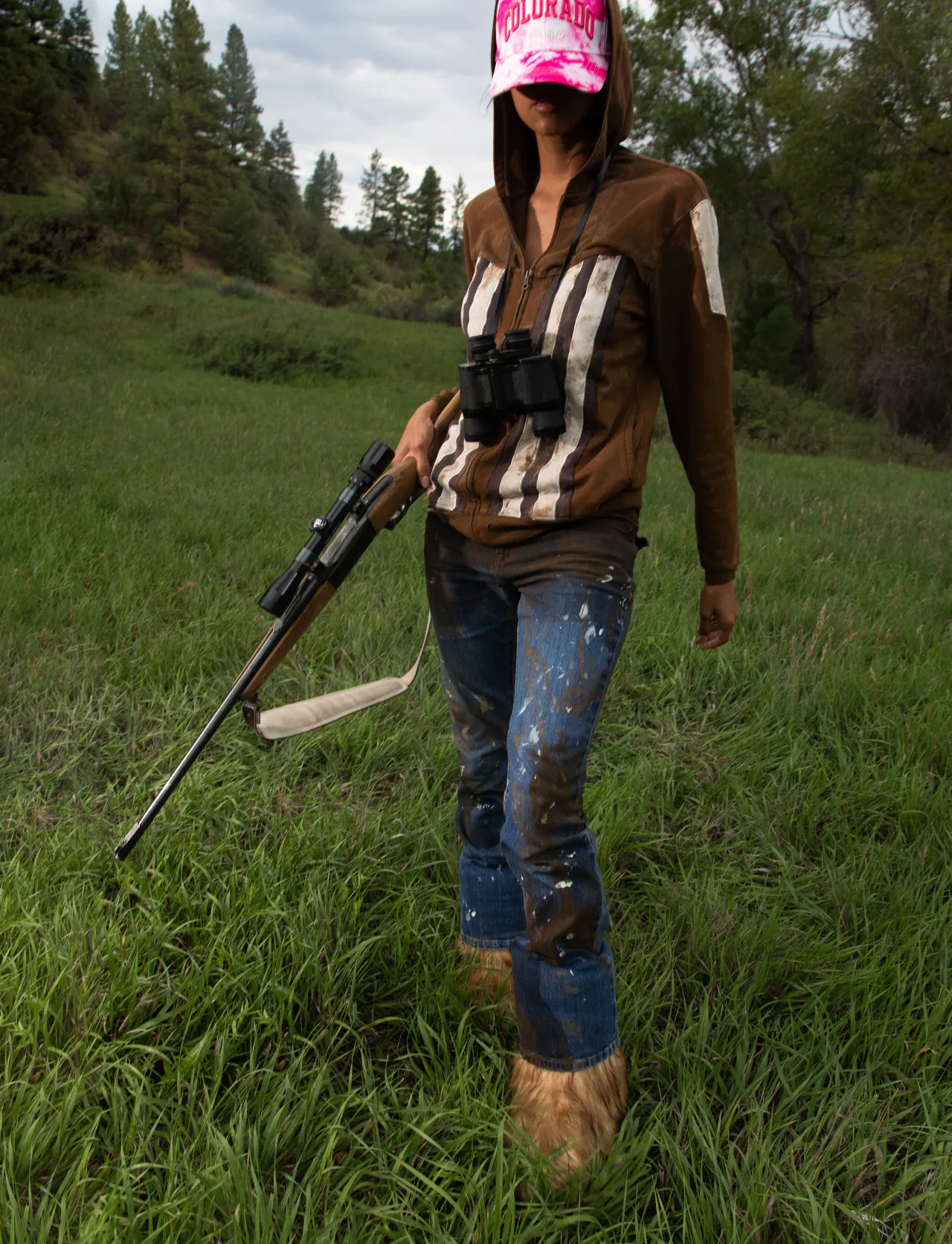
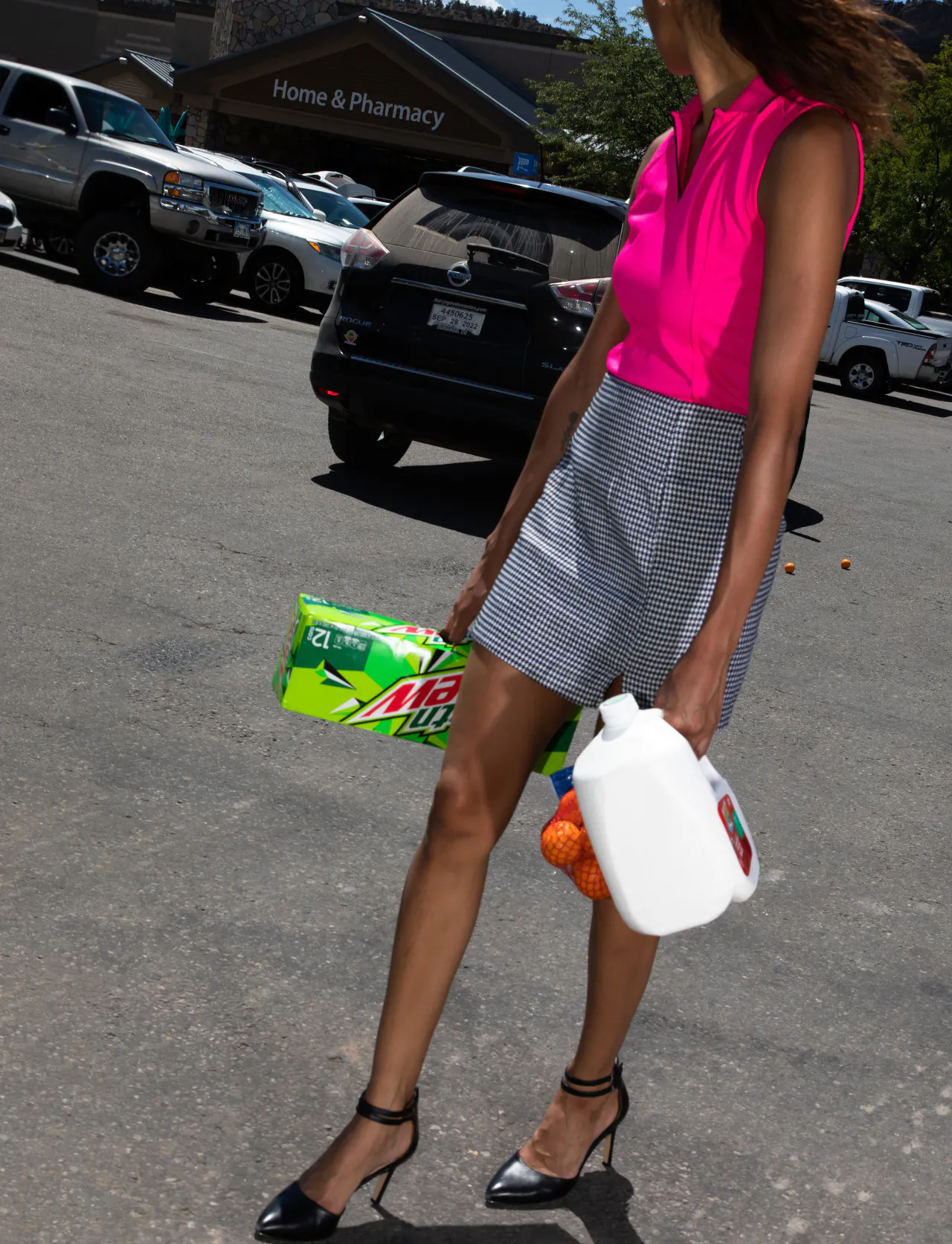
While things appear to be back to normal, the enhancement of surveillance has only grown in capacity. Police/military have seized on this enhancement to suit their own ends; we are living beneath a microscope; it blindly casts no judgment. What “creatives” do in their day-to-day lives is strategically translated to digital ends. Cultic value disappears under its apathetic monitoring: you are held accountable as a brand. Negative advertisements, like ‘Models Suck’ t-shirts, are also advertisements: they too seek their own perception. Everything is not-not an advertisement. The use of multiple accounts/concealing social media as an exercise in lore-building, the anticipation of ‘being watched’. Psychic rupture now becomes subliminal branding. We have internalized the screen; it sees through us now.
Katherine Bigelow, the famous director of The Hurt Locker and Zero Dark Thirty, two iconic military films of the post 9/11 era, once ran with avant-garde performance artists and was an understudy of Sylvere Lottinger. The underground and the overground regularly overlap, displace each other through an assemblage of contextual signifiers and topical opportunities. Technology creates high and low standards of cognitive capacity; computers can only pick out from a set of data it’s already given. It has no ability to choose a new direction. We inject implausible scenarios into daily life as an expression of human autonomy. If we gain exposure to too much of one thing, we cryptically desire and covet what can be conceived at the boundaries of shared imagination.
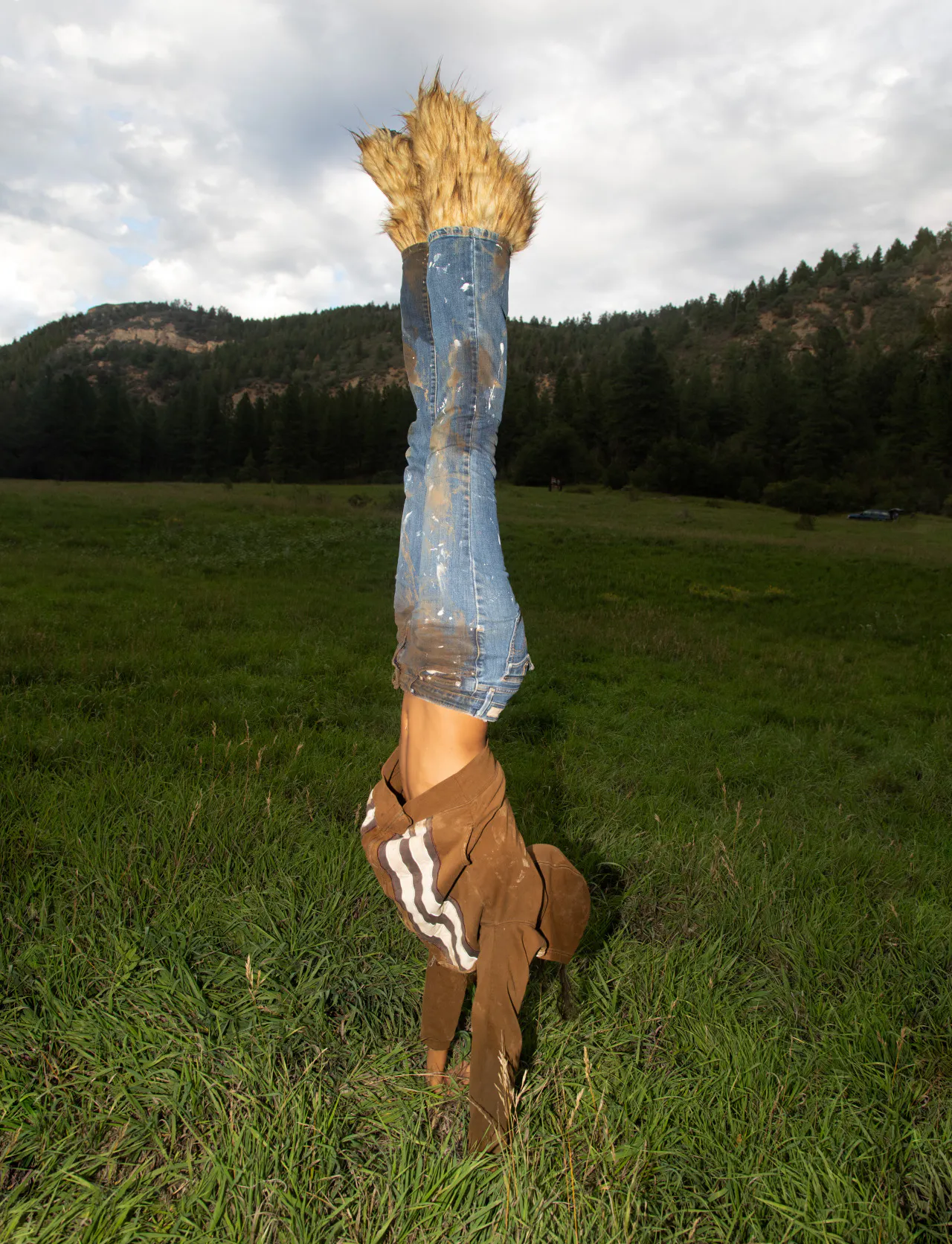
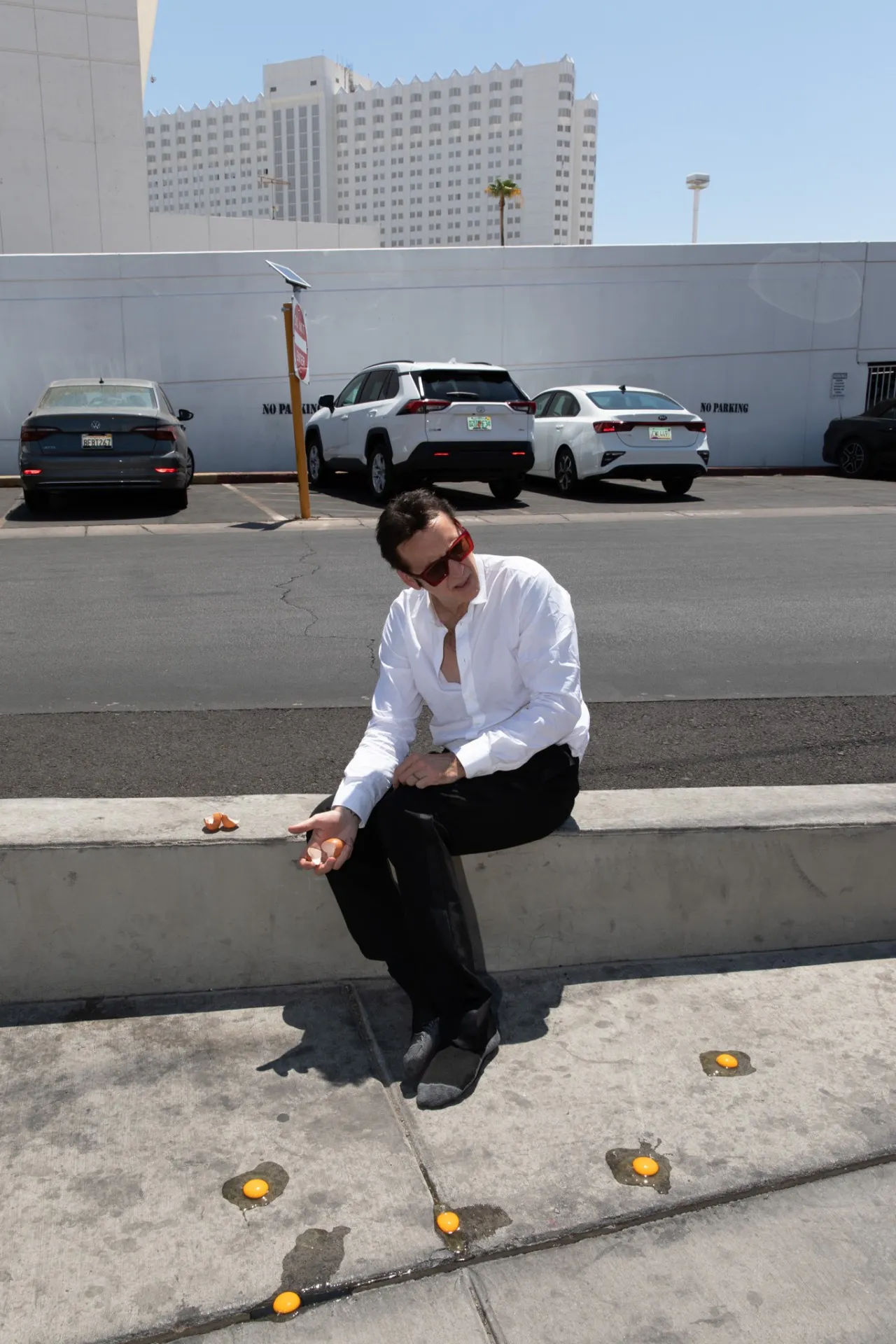
I can’t help to notice the pattern of fashion photography with sets that resemble the unspectacular and pedestrian-from liquor marts to parking lots, from messy studio apartments to fast food restaurants. Maybe after years of no-place & lockdown, we’re seeing a demand for the representation of daily life. The screen was our all encompassing portal in which our lives became mediated during the pandemic, barring you were one of the almost patronizingly christened ‘essential workers’, in which you received no break. The glamorization of the working-class aesthetic has already received its fair share of backlash, from Vivienne Westwood's skinhead subjects to ‘Cartharrt-core’. The accusation has always been that the industry profits off of organically mediated subcultures. Fashion has always been a cosmopolitan venture; priding itself on the celebration of difference, borrowing from various traditions spanning the globe. But global industries invariably differ from folk economies. This is more about the actually existing period of industrialization we’re in than any particular sector of global industry itself.
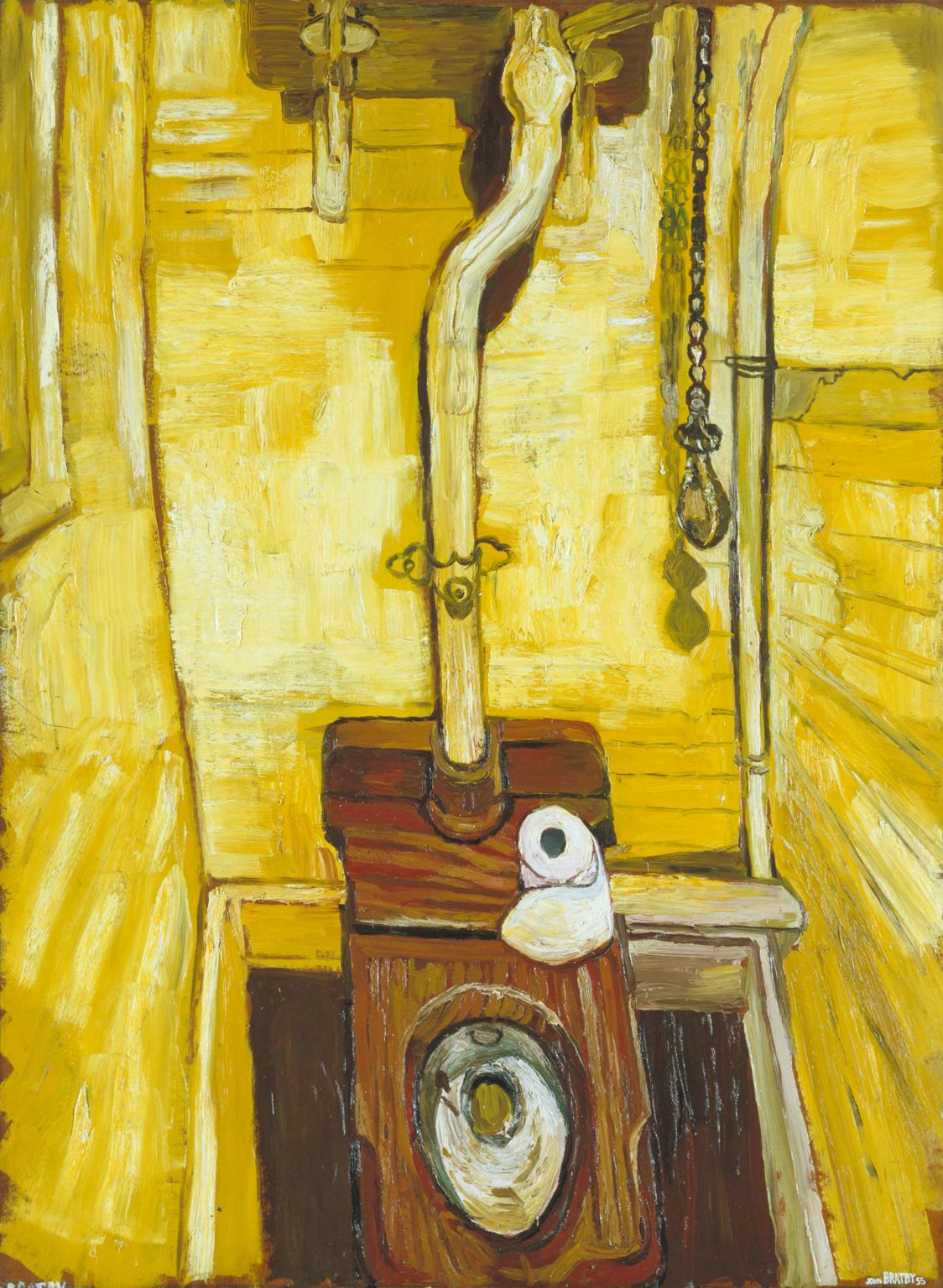
Kitchen Sink Realism, a cultural movement developed in Britain some time in the early 1960’s used a style of social realism to depict the social climate of young people at the time. Faced with the prospect of downward mobility, its subjects often expressed brooding nihilism and disillusionment with modern society. Many of its themes dealt with social taboos at the time such as abortion and homelessness in pedestrian settings, such as pubs and social halls. It was a response to the dramatic, narrative-driven escapism of the generation that predated it. Bejeweled denim Americana grocery outlet pastiche. ‘Models Are Broke Too’, I can see this as a Prayingg shirt. ‘Give Girls Money’. I can see it modeled at a laundromat which the model drove to from her 200 square foot studio apartment, the entire process made into an Instagram reel.
The return of the term ‘heroin chic’ will also inevitably be used as an invective. The influence of tragic youth melancholia that was captured by young photographer Davide Sorrenti and all of their connotations were blamed on him after his drug-related death. There was little talk of the fact Sorrenti was already dying of a terminal illness and likely wouldn’t have lived to see thirty. The great documentary See Know Evil by Charles Curran showcases the social reality that exists aside from the supposed movement, as well as the complexity of Davide’s life and his relationship to illness and death. The aftermath prompted president Bill Clinton to ascribe the ills of society to prematurely-processed youth culture, labeling it ‘Deplorable’. A mass industry distancing from the aesthetic was enacted. Since then, Opioid deaths have increased fivefold. Many of the same companies responsible for manufacturing and lobbying for the mass prescription of Oxycontin have capitalized off of a pandemic state-of-exception to multiply their profit and power. What does fashion have to do with any of that?
One ubiquitous example is United Colors of Benneton’s 92 campaign, featuring AIDS patients dying in their blood relatives arms, regular scenes from around the world that achieved historical controversy for its attachment to a brand identity. But little is spoken about one's right to use such imagery or who is granted access to these images. The problem with trend-authorship is that it rejects both discovery and innovation-discovery being a process of evolution, and innovation a sentiment that feels as if it’s a foreclosed possibility.
Irony and cynicism in art and fashion have had a consistent discourse surrounding it since the 1980’s, as not everything is Demna Gvasalia’s fault. Nihilism has become a catch-all-phrase to describe any gesture towards ahistoricity. Balenciaga presented its SS23 campaign in a dystopic volcanic sludge mud pit. There were no cultural niche (weak) signifiers to come to mind, accessing the power of the atemporal. This was a showcase for the End Of History, and therein lies its strange, unsettling power. "I hate boxes, I hate labels, and I hate being labeled and placed in a box," Demna stated in his show notes. There were no descriptors to guide the viewer. There appears to be a tectonic tension between pop-identity, celebrity, and post-culture happening. What does it even mean to be a celebrity at the end of history?
I still believe fashion, with an emphasis on bespoke craft and quality, has the ability to ascend the cheapness of consumer driven production. One's relationship to an object can exist beyond the periphery of the desire of desire. Russian art critic Boris Groys noted the constant change the avante-garde had initially sought became the status quo, so if you want to change the status quo, you need to escape the change. Celebrity is both niche and pedestrianized, the artist rendered to a state of non-professionality-a fate which can only be resuscitated through the devotion to form-making and the duration of time.
I love the way Japanese brands play with Americana. I see it as a sign of respect, and honestly, they do it even better than us now in some ways. I love the era of Kapital where the models were dreadlocked burning-man types petting horses in Iceland. The 2009 winter catalog aptly titled ‘Innocent World’ wherein one of the models is meditating on a hill, each blonde dreadlock suspended by sticks at the foreground of a campfire. Some things still have the capacity to push our imaginations and re-mystify the world within the flurry of homogenizing change and the hell of particulars; the demystification of other people.